

Professional Commercial Kitchen Grease Trap Cleaning and Construction Services
Professional grease cleaning services in Kenya for restaurants, hotels, industrial kitchens, and factories. Certified removal, eco-friendly disposal, and emergency response across Nairobi, Mombasa, Kisumu, Nakuru, Eldoret, and 50+ towns. Custom quotes. NEMA-compliant on every job.
Omidrop Africa Grease & Sanitation Operations Team
"We've cleaned grease traps so blocked that a Nairobi restaurant's kitchen drain had fully backed up — kitchen shut, 80 covers lost on a Friday evening. We've responded to industrial oil spills at Mombasa warehousing facilities at 2am with a full containment team. We've degreased commercial hoods in Kisumu hotel kitchens where grease had built up to fire-risk thickness over two years of skipped maintenance. Grease cleaning in Kenya isn't optional — it's what keeps your licence, your kitchen, and your building safe."
Grease cleaning services in Kenya refer to the professional removal, treatment, and certified disposal of accumulated cooking grease, oils, and fat deposits from commercial kitchens, grease traps, industrial equipment, exhaust systems, and production facilities — using industrial-grade degreasers, high-pressure equipment, and NEMA-compliant waste handling methods. From a restaurant hood and duct deep-clean in Nairobi's Westlands to grease trap pumping for a Mombasa hotel chain to industrial oil spill containment in Nakuru's industrial area, professional kitchen grease cleaning companies in Kenya protect businesses from fire hazards, health violations, blocked drains, KEBS non-compliance, and the kind of kitchen shutdown that costs more in a single night than six months of professional maintenance. This guide covers everything: what grease cleaning is, who needs it, how it works, what it costs, and why professional service beats every alternative.
Omidrop Africa's certified grease cleaning team at work — industrial-grade degreasers, high-pressure hot water extraction, and NEMA-compliant waste disposal on every job.
What Exactly Is Grease Cleaning — And Why Is It One of Kenya's Most Urgently Neglected Services?
Grease cleaning is the systematic removal of polymerised cooking fats, oils, and grease (FOG) that accumulate on kitchen exhaust hoods, ductwork, fryers, grill surfaces, grease traps, and drains — and of industrial lubricants, hydraulic oils, and process grease from machinery, floors, sumps, and waste containment systems in factories and warehouses.
In Kenya's booming hospitality and food processing sectors, the gap between professional maintenance standards and actual practice is wide — and costly. Here is what that neglect produces:
- Kitchen fires: Grease buildup in hoods and ducts is the leading cause of commercial kitchen fires in Kenya. A polymerised grease layer is a solid accelerant — once ignited, it burns at temperatures that conventional suppression systems cannot control without pre-wetting the duct surface first.
- KEBS and health inspection failures: Kenya Bureau of Standards kitchen audits and county public health inspections check hood cleanliness, grease trap function, and drain condition. Accumulated grease is a direct non-compliance finding that can trigger immediate suspension of food handling licences.
- Blocked grease traps and drain backups: A grease trap not cleaned on schedule solidifies and loses all interceptor function — allowing raw FOG into municipal sewer lines, causing backups that NEMA treats as an environmental violation with significant penalties.
- Pest and odour problems: Decomposing grease is a powerful pest attractant. Restaurants with uncleaned grease traps and floor drain buildup consistently show elevated cockroach, rat, and fly activity regardless of other pest control measures in place.
- Equipment failure and energy waste: Grease accumulation on industrial cooking and processing equipment reduces thermal efficiency, increases energy consumption by 15–30%, and accelerates component failure in motors, bearings, and seals.
⚠️ Kenya compliance alert: NEMA's Environmental Management and Coordination Act (EMCA) classifies improper grease and oil waste disposal as an environmental offence. Restaurants and factories that dispose of FOG waste down drains, into surface water, or through unlicensed handlers face penalties of up to KES 500,000 and criminal liability. Grease waste disposal and cleaning companies in Kenya operating at professional standard provide NEMA waste transfer documentation on every job — protecting your compliance position entirely.
What Types of Grease Cleaning Services Are Available in Kenya — The Complete Service Menu?
Commercial grease removal and maintenance services in Kenya cover far more than most businesses realise. There are six distinct service categories, each requiring different equipment, chemistry, and compliance documentation:
Restaurant Kitchen Grease Cleaning
Nairobi, Mombasa & all townsReliable restaurant grease cleaning in Nairobi and Mombasa — hood, duct, fan, filter, grill, fryer, and floor drain deep cleaning. Includes post-clean inspection certificates for health audits and KEBS compliance.
Industrial Grease & Oil Cleaning
Factories & production facilitiesIndustrial grease and oil cleaning solutions Kenya — machinery degreasing, floor sump cleaning, production line FOG removal, and hydraulic oil spill containment with full NEMA certification per load.
Grease Trap Cleaning & Pumping
Restaurants, hotels & food processorsBest grease trap cleaning services near me Kenya — full trap pumping, scraping, jetting, baffle inspection, and waste disposal with NEMA transfer certificate. Scheduled maintenance contracts available nationwide.
Eco-Friendly Grease Cleaning
Green-certified chemical systemsEco-friendly grease cleaning service providers in Kenya — biodegradable enzymatic degreasers and phosphate-free systems for food-prep areas, certified organic kitchens, and LEED-rated buildings.
Emergency Grease & Oil Spill Response
24/7 rapid containment KenyaEmergency grease and oil spill cleaning services Kenya — fryer overflow, grease trap failure, industrial oil spills, and kitchen fire post-clean. 2–4 hour response in Nairobi and Mombasa. Available 24/7.
Deep Kitchen Grime & Grease Cleaning
Industrial kitchens & institutionsDeep grease and grime cleaning for industrial kitchens Kenya — multi-day deep clean programmes for hospital kitchens, hotel banqueting facilities, institutional caterers, and food processing prep areas.
Why Can't You Just Use Chemical Drain Cleaners — The Honest Comparison Between DIY and Professional Grease Cleaning?
This is the question most facility managers ask — usually after a drain cleaner fails and the grease trap backs up anyway. Here is the definitive, honest comparison:
| Factor | DIY / Chemical Cleaners | Professional Grease Cleaning |
|---|---|---|
| Grease removal depth | Surface only — cannot penetrate polymerised deposits | Full removal including hardened deposits in ducts, traps & drains |
| Hood & duct cleaning | Cannot do — inaccessible without specialist equipment | Full access — hot water pressure, steam & rotary brush systems |
| Grease trap function | Drain cleaners bypass traps — no benefit to interceptor efficiency | Full pumping, scraping & jetting restores 100% interceptor function |
| NEMA waste documentation | None — DIY disposal is usually illegal | Full — NEMA waste transfer certificate per job |
| Fire risk reduction | None — duct grease remains and is the primary fire risk | Complete — post-clean inspection confirms fire-safe duct clearances |
| Health inspection pass | Partial — visible surfaces only; duct & trap inspection fails | Full — documented service record satisfies all inspection points |
| Environmental safety | Risk — caustic chemicals damage sewer infrastructure | Safe — biodegradable degreasers with licensed waste collection |
| Cost over 12 months | Lower upfront; higher when emergency call-out or compliance penalty hits | Scheduled maintenance consistently cheaper than reactive emergency bookings |
💡 Author's honest assessment: The facilities that rely on drain cleaners between professional visits are consistently the ones that call us on a Friday evening with a fully blocked grease trap, a kitchen that cannot operate, and a health inspector visit scheduled for Monday. The cost of a blocked Friday night service call is typically 4–6x the cost of a scheduled quarterly clean. Maintenance is always cheaper than emergency response — without exception.
What Do Industrial Facilities in Kenya Need to Know About Grease and Oil Cleaning — The Complete Factory Guide?
Industrial grease and oil cleaning solutions Kenya cover a different technical and regulatory landscape from restaurant kitchen cleaning. Here is what factory and facilities managers need to understand:
| Industrial Grease Source | Cleaning Method | Compliance Requirement | Typical Frequency |
|---|---|---|---|
| Hydraulic oil sumps & drip trays | Vacuum extraction + solvent degreasing | NEMA waste transfer note | Monthly — quarterly |
| Food processing fat & grease | Hot water + enzymatic degreaser | KEBS food safety certificate | Weekly — bi-weekly |
| Vehicle workshop & lube bay | Pressure wash + interceptor pumping | NEMA interceptor service record | Monthly |
| CNC machine coolant & cutting oil | Vacuum tanker + floor jet wash | Hazardous waste manifest | Monthly |
| Transformer oil containment | Specialist oil recovery + soil remediation | NEMA spill report + certificate | On spill / annual check |
| Production floor general degreasing | Ride-on scrubber + hot water extraction | Internal hygiene audit record | Weekly |
🌿 Eco-friendly note for industrial clients: Eco-friendly grease cleaning service providers in Kenya use biodegradable enzymatic systems that break down grease through biological action rather than chemical burning — safer for your workforce during application, safer for your drainage infrastructure, and fully compliant with NEMA environmental standards. Omidrop Africa uses eco-certified degreasers as standard on all food-contact surface and food processing cleaning across Kenya.
Grease Is Building Up Right Now.
Don't Wait for a Friday Night Crisis.
Professional grease cleaning services in Kenya — restaurants, hotels, industrial kitchens & factories. Emergency and scheduled service. NEMA-compliant disposal. Custom quotes. 50+ towns.
How Does Omidrop Africa's Professional Grease Cleaning Process Work — From First Call to Compliance Certificate?
Understanding the professional process shows exactly what separates a certified service from a crew with a pressure washer. Here is the full Omidrop Africa process for commercial kitchen and industrial grease cleaning:
- Site Assessment & Scope Definition: Every job begins with a site assessment — either on-site or from photos and facility dimensions you provide. We identify all grease accumulation points: hoods, canopy filters, duct runs, fan units, grease traps, floor drains, fryer surrounds, and industrial equipment. We document and confirm the scope before pricing — no surprise additions on the day.
- Pre-Clean Preparation & Safety Setup: Our team establishes containment around all work areas — drip trays beneath hoods, drain covers over floor drains, and chemical containment barriers around grease trap access points. All food-prep surfaces are covered and protected before any cleaning agent is applied. Team PPE is confirmed compliant before the job starts.
- Chemical Degrease Pre-Treatment: Industrial alkaline or enzymatic degreaser is applied to all accumulated grease surfaces with the appropriate dwell time — this is the step most DIY and amateur operators skip. Correct dwell time converts polymerised grease to a removable emulsion. Cutting dwell time produces incomplete removal and fast re-accumulation.
- High-Pressure Hot Water Extraction: After dwell time, hot water high-pressure washing at 80–95°C removes the emulsified grease from hood surfaces, duct walls, fan blades, and filter media. Pressure is applied systematically from the top of the duct down — ensuring grease is captured in the collection system, not redistributed into the kitchen.
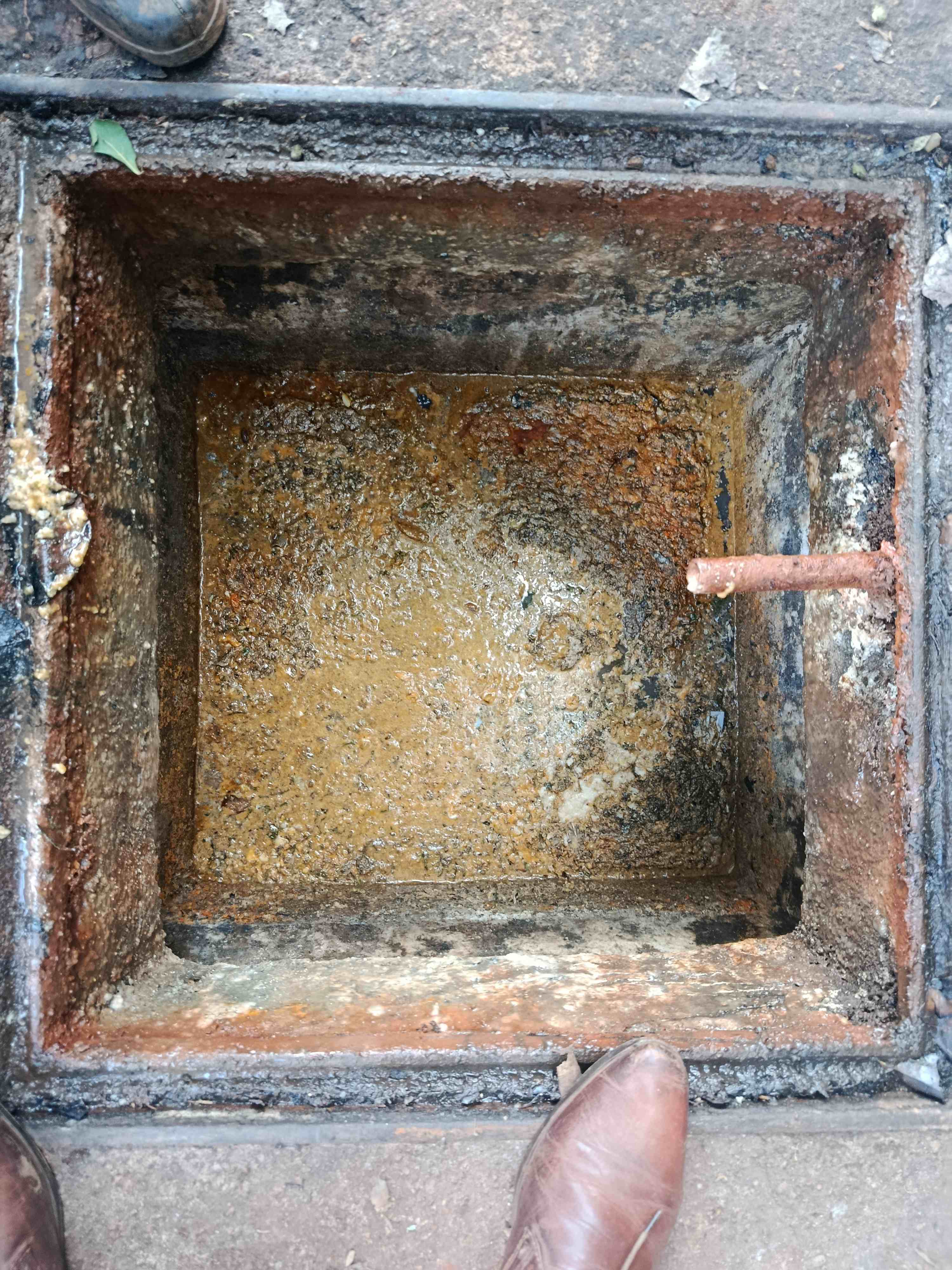
- Grease Trap Pumping & Jetting: Where grease traps are in scope, our vacuum tanker pumps all accumulated FOG and sludge, the trap walls are scraped and jettied, and the trap baffles inspected for damage. The trap is refilled with fresh water to the correct operating level before service completion.
- NEMA-Compliant Waste Collection & Disposal: All collected grease waste is loaded into our licensed waste collection vehicle and transported to an approved treatment or recycling facility. A NEMA waste transfer note documenting waste type, volume, collection date, and disposal destination is provided on job completion — your legal protection.
- Post-Clean Inspection & Service Certificate: Our team conducts a post-clean inspection of all cleaned surfaces, confirms duct and filter clearances meet fire safety standards, and issues a service certificate documenting what was cleaned, when, by whom, and with what — suitable for health inspection, KEBS audit, and insurance review.
Omidrop Africa grease trap pumping and jetting — full FOG removal, baffle inspection, and NEMA waste transfer documentation issued on completion.
What Makes Omidrop Africa the Right Choice — 6 Reasons Kenya's Best Kitchens and Factories Choose Us?
NEMA-Documented Waste Disposal on Every Single Job
Every grease and oil waste load we remove is transported to a licensed facility with a documented NEMA waste transfer note. This protects you from environmental liability and provides the compliance documentation that NEMA inspectors, insurance auditors, and facility certification bodies require. Almost no informal cleaning crew in Kenya can provide this.
Industrial Equipment — Not Domestic Pressure Washers
Our commercial hot-water pressure units operate at 80–95°C and 250+ bar — the physical conditions required to break down polymerised grease in exhaust ducts. A domestic pressure washer at ambient temperature cannot do this job. We also carry vacuum tankers, rotary duct brushes, and industrial steam units for complex installations.
Certificates Suitable for Health Inspection & Insurance
Our post-clean certificates document the job scope, team, chemicals used, waste volume removed, and disposal destination — in a format acceptable to county public health inspectors, KEBS auditors, and commercial kitchen insurance underwriters. If your insurer or KEBS requires documented kitchen maintenance records, our certificates are the right format.
Eco-Friendly Chemistry as Standard — Not an Upsell
Biodegradable enzymatic degreasers are our default on all food-contact surface cleaning. This matters to your team's health during application, to your drain system's long-term integrity, and to your NEMA compliance standing. We don't default to caustic soda-based chemicals that deliver short-term results at the cost of long-term drain damage.
Emergency Response — 2–4 Hours in Nairobi and Mombasa
Emergency grease and oil spill cleaning services Kenya — our rapid response team is on call 24/7. Grease trap failure on a Friday evening, kitchen hood fire near-miss, industrial oil spill — we mobilise within 2–4 hours in Nairobi and Mombasa. Upcountry towns receive response within 6–12 hours depending on location.
One Team — Grease, Water, Drains, and Septic
A kitchen needing a grease trap clean often also needs drain jetting. A deep grease clean often benefits from a simultaneous water tank clean. Omidrop Africa manages the complete sanitation chain under one service agreement — one number, one invoice, one team that knows your facility — with a 10–15% combined service discount.
Should Your Business Sign a Grease Cleaning Maintenance Contract — Or Is Ad-Hoc Booking Good Enough?
Most Kenyan food businesses book grease cleaning reactively — calling only when something fails or a health inspection is looming. Here is the honest comparison of what that costs versus a scheduled maintenance programme:
→ Reactive Ad-Hoc Cleaning (Common — Not Optimal)
- Pay standard or emergency rate per call-out
- No guaranteed team availability when you need it
- Emergency premium when kitchen is down and blocked
- No volume pricing advantage
- Operations disrupted during grease trap failures
- No scheduled cleaning reminders — you forget until it's urgent
- Single invoice per visit — harder to budget annually
- No priority dispatch on busy days
- Health inspection always a compliance risk
★ Scheduled Maintenance Programme (Smart — Recommended)
- Volume-discounted rate per service visit
- Guaranteed team allocation — your slot is reserved
- No emergency premium — you are always scheduled ahead
- 20–35% lower cost-per-clean vs reactive bookings
- Auto-scheduling eliminates grease trap failures
- Monthly or quarterly consolidated invoice for accounting
- Dedicated account manager for escalations
- Priority dispatch queue on busy days
- Annual service certificate for KEBS and health compliance
💡 Omidrop Africa maintenance programme terms: Minimum programme period is 3 months — no long lock-in required. Available monthly, quarterly, or biannual visit schedules. Flexible scope — your programme can be adjusted upward or downward as your kitchen volume changes. Combined with other services (drain jetting, water tank cleaning, septic) for maximum site efficiency. Call +254 745 426 565 to design your facility's programme.
How Much Do Grease Cleaning Services Cost in Kenya — Why Custom Quotes Are the Only Honest Answer?
Grease cleaning pricing in Kenya varies significantly enough across job types, facility sizes, accumulation depth, and locations that any published fixed price list is either unfair (overcharging simple jobs) or unsustainable (undercharging complex ones). Here is what goes into an accurate custom quote:
| Pricing Variable | Why It Affects Cost | How to Get the Best Rate |
|---|---|---|
| Kitchen or facility size | Primary driver — determines team size, chemical volume, and time on site | Accurate dimensions on booking avoid day-of scope surprises |
| Grease accumulation depth | Maintenance clean vs remediation clean require different chemistry and time | Book on schedule — don't let grease build to remediation depth |
| Hood & duct run length | Complex multi-branch duct systems with multiple access panels cost more | Provide duct drawings or photos on quote request |
| Grease trap size & condition | Trap capacity (litres) and accumulation depth determine pump time | Schedule cleaning when trap is 25% full — not 90% blocked |
| Scheduling: standard vs emergency | Emergency call-out carries a priority surcharge — always | Schedule ahead and never let the tank fail before calling |
| Waste volume requiring NEMA disposal | Industrial jobs with large waste volumes have higher disposal costs | Provide accurate waste type and volume estimate on booking |
| Location | Nairobi & Mombasa have lowest travel component; upcountry adds distance cost | Programme clients in upcountry towns get Nairobi-equivalent rates |
Get Your Custom Grease Cleaning Quote
Tell us your facility type, size, location, and last cleaning date — we'll give you a transparent, fair quote within the hour. Residential, commercial, industrial, and emergency rates all available. No obligation, no hidden charges.
Call Us TodayHow Does Grease Cleaning Connect to Omidrop Africa's Full Sanitation Suite — The Services That Work Best Together?
Grease cleaning doesn't exist in isolation — it connects directly to your property's complete water and waste management infrastructure. Omidrop Africa manages the full chain:
- Grease trap cleaning + drain jetting: A clean grease trap with partially blocked drain lines still backs up. Combining grease trap pumping with high-pressure drain jetting ensures the entire FOG removal pathway is clear — from kitchen drain to municipal connection. Our drain jetting service →
- Kitchen grease clean + water tank cleaning: A deep kitchen degreasing is the ideal time to simultaneously clean the facility's water storage tanks — the kitchen is already out of service, the team is on site, and a single mobilisation covers both compliance requirements.
- Industrial degreasing + septic tank cleaning: Factories with canteen facilities and industrial waste streams benefit from a combined degreasing and septic programme — one visit, one invoice, one NEMA certificate covering both waste streams.
- Emergency grease response + exhauster services: A grease trap overflow often produces a situation requiring both grease removal and waste water extraction. Our emergency team arrives with both capabilities — one response, complete remediation.
- Grease cleaning + bulk water delivery: Facilities needing a full sanitation reset — particularly after a supply disruption or post-construction opening — benefit from combining grease system cleaning with certified bulk water delivery to flush and commission the full kitchen system simultaneously.
- Annual programme + CCTV drain inspection: After a major grease clean, CCTV inspection of your drain runs confirms no grease-related pipe damage has occurred — providing baseline documentation for KEBS and county health inspection compliance records.
💡 Combined service saving: Any two or more Omidrop Africa services booked together qualify for a 10–15% combined discount with a single site mobilisation. One number. One invoice. Custom quote covers everything. Call +254 745 426 565 or WhatsApp to plan your facility's full sanitation programme.
Where Are Grease Cleaning Services Available in Kenya — The Complete Town Coverage List?
Omidrop Africa operates grease cleaning services in Kenya across all major urban and industrial centres — not just listed coverage but real operational capacity with deployed teams and equipment:
Frequently Asked Questions About Grease Cleaning Services in Kenya
Grease cleaning services in Kenya are professional removal and disposal services for accumulated cooking fats, oils, and grease (FOG) from commercial kitchen exhaust systems, grease traps, drains, and surfaces — and for industrial lubricants and process grease from factory equipment. Commercial kitchens are legally required to maintain clean hood and exhaust systems, functioning grease traps, and documented FOG disposal under KEBS food safety standards, county public health regulations, and NEMA environmental requirements. Skipping professional cleaning exposes operators to fire hazard, health inspection failures, drainage violations, and NEMA environmental penalties. Book a site assessment →
The correct grease trap cleaning frequency in Kenya follows the "quarter rule" — clean when the trap is 25% full of FOG and solids. For high-volume restaurant and hotel kitchens in Nairobi and Mombasa, this typically means monthly cleaning. Mid-volume operations require quarterly cleaning. Low-volume operations with large traps can extend to six-monthly. The critical mistake is waiting for the trap to show failure signs — by that point, FOG has already entered the drain system. Omidrop Africa offers scheduled grease trap cleaning services near me Kenya with programmes that automatically trigger at the right interval for your kitchen's volume. Call +254 745 426 565 to set up your schedule.
Deep grease and grime cleaning for industrial kitchens Kenya is a multi-phase programme covering every grease accumulation point in a large commercial kitchen — hoods, canopies, filters, fan units, duct runs from hood to roof, grease trap, all floor drains, cooking equipment surfaces, tiling, walls, and exhaust fan blades. It requires industrial hot-water pressure systems, rotary duct brushes, steam cleaning units, enzymatic chemical degreasers, and vacuum waste collection. A full deep clean for a large institutional kitchen (hospital, hotel, university) typically takes 2–3 days with a team of 4–6 specialists. The result is a kitchen that passes any health inspection and is cleared of all fire-risk grease accumulation. Omidrop Africa provides post-deep-clean certificates suitable for KEBS audit submission.
Emergency grease and oil spill cleaning services Kenya are activated when a grease trap overflows, a kitchen has a fire related to grease buildup, a factory has an industrial oil spill, or a lube bay has a containment failure. Our emergency response team is available 24/7 — 2–4 hour response in Nairobi and Mombasa, 6–12 hours for most upcountry towns. On arrival, the team contains the spill, removes all contaminated material under NEMA protocols, decontaminates the affected surfaces, and provides an incident report and waste disposal certificate. NEMA requires industrial spill incidents to be documented — our emergency response service provides compliant documentation automatically as part of the job. Call +254 745 426 565 for emergency dispatch.
Yes — and they are our default, not an upsell. Eco-friendly grease cleaning service providers in Kenya use biodegradable enzymatic and alkaline degreaser systems that break down FOG through biological and chemical action without caustic compounds, phosphates, or environmentally persistent surfactants. Omidrop Africa uses eco-certified degreasers as standard on all food-contact surface cleaning. For certified organic kitchens, LEED-rated buildings, or facilities with specific environmental commitments, we can provide full chemical certification and data sheets confirming biodegradability and NEMA compliance. Enzymatic systems actually penetrate polymerised grease more thoroughly than caustic systems over correct dwell times — they are not a compromise on performance.
Omidrop Africa provides custom quotes for all commercial grease removal and maintenance services in Kenya — because the variables (facility size, accumulation depth, duct run length, grease trap capacity, industrial scope, waste volume, location, and scheduling) make any fixed published price unfair to either party. Request your quote at our booking form or call +254 745 426 565 for an estimate within the hour. Clients on maintenance programmes consistently pay 20–35% less per clean than clients making reactive one-off bookings. The most effective way to control grease cleaning costs in Kenya is a scheduled maintenance programme — not waiting for a failure.
Yes. Reliable restaurant grease cleaning in Nairobi and Mombasa is our highest-volume operation, but our teams cover Kisumu, Nakuru, Eldoret, Thika, Nyeri, Meru, Kakamega, Kericho, Nanyuki, Kisii, Malindi, Garissa, and 30+ additional towns across Kenya. For upcountry locations, we typically combine multiple client jobs in a single regional deployment to keep travel costs manageable — meaning contracted clients in smaller towns often receive the same pricing as Nairobi clients on scheduled programmes. Call +254 745 426 565 with your town and facility details for specific availability and lead times at your location.
Stop Risking Your Licence,
Your Kitchen, and Your Business.
Professional grease cleaning services in Kenya — NEMA-certified, eco-friendly, and backed by compliance documentation that protects your licence. Emergency and scheduled service. Custom quotes. 50+ towns. One call covers everything.
Explore More Omidrop Services
Comprehensive water and sanitation solutions for all your needs
Bulk Clean Water Delivery
Reliable clean water delivery in Nairobi and Kenya for homes, businesses, and events.
clean water delivery Nairobi, bulk water supply KenyaSwimming Pool Refills
Fast and safe water delivery for swimming pools across Kenya.
swimming pool refills Nairobi, pool water delivery KenyaEmergency Water Delivery
24/7 emergency water supply for urgent needs in Nairobi and beyond.
emergency water delivery Nairobi, urgent water supply KenyaConstruction Water Delivery
Bulk water for construction sites in Kenya, delivered on time.
construction water delivery Nairobi, water for building sites KenyaWater Tank Cleaning
Professional cleaning for water tanks to ensure safe drinking water.
water tank cleaning Nairobi, tank sanitation KenyaWater Tank Repair
Expert repairs for water tanks to prevent leaks and contamination.
water tank repair Nairobi, tank maintenance KenyaExhauster Services
Reliable exhauster services, septic tank cleaning and grease trap maintenance in Kenya.
exhauster services Nairobi, septic tank cleaning KenyaSewer and Drainage Unblocking
Fast sewer unblocking and drainage solutions across Nairobi.
sewer unblocking Nairobi, drainage services KenyaGrease Cleaning Services
- Restaurant kitchen deep clean
- Hotel & hospitality kitchens
- Grease trap pumping & jetting
- Industrial grease & oil cleaning
- Eco-friendly certified cleaning
- Emergency spill response 24/7
- Deep kitchen grime cleaning
- NEMA waste certificates
Related Services
- Bulk Water Delivery
- Water Tank Cleaning
- Commercial Tank Cleaning
- Septic Tank Cleaning
- Exhauster Services
- CCTV Inspection
Key Coverage Towns
- Nairobi & all suburbs
- Mombasa & Coast
- Kisumu & Nyanza
- Nakuru & Rift Valley
- Eldoret & Western Kenya
- Thika, Ruiru, Kiambu
- 50+ towns nationwide
Available 24/7 — 2–4hr response in Nairobi & Mombasa
Call Emergency Line Now