Design · Build · Commission

Sewage & Industrial Effluent Treatment Plants, Built for Kenya's Water Reality

Omidrop Africa engineers and constructs NEMA-compliant treatment plants for estates, schools, hospitals, and hotels — and pretreatment / ETP systems for factories with high-strength trade effluent. Fixed pricing, full civil and mechanical works, 10-year structural warranty.

  • NEMA-compliant discharge
  • 10-year warranty
  • Design-and-build turnkey
  • Nationwide service
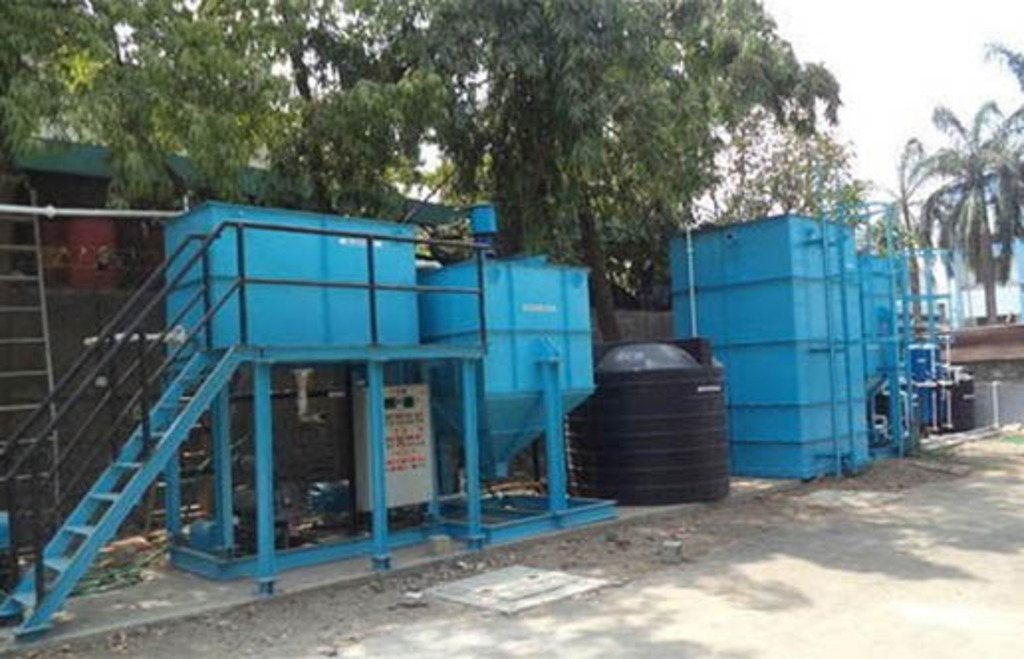
Completed sewage treatment plant construction by Omidrop Africa in Kenya

What Is a Sewage Treatment Plant (STP) and How Does It Work?

A sewage treatment plant is an engineered system that removes solids, organic matter, and pathogens from wastewater through a sequence of physical, biological, and sometimes chemical treatment stages, producing effluent clean enough to discharge safely or reuse. Unlike a septic tank or biodigester, an STP is purpose-engineered for higher daily flow volumes and stricter effluent quality targets, making it the standard choice for estates, institutions, and industrial sites. Where a factory's wastewater carries a heavier or more variable load than typical sewage, the same principle scales up into an industrial effluent treatment plant (ETP) with an added pretreatment stage in front of it.

Two waste streams, two designs

Built Differently for Domestic and Industrial Wastewater

Domestic sewage and industrial effluent are not the same problem, so we don't treat them with the same design. Find the track that matches your project.

Domestic & Institutional STPs

Estates · schools · hospitals · hotels · offices

Consistent, moderate-strength sewage flow driven by occupancy. Sized by Population Equivalent, treated with proven biological processes (SBR, MBBR, or extended aeration), and discharged or reused on-site.

  • Sized in m³/day and Population Equivalent (PE)
  • Standard biological treatment — no specialised pretreatment usually needed
  • Treated water commonly reused for irrigation or flushing
  • Package plants commission in 4–8 weeks
See domestic pricing tiers →

Industrial Effluent Treatment (ETP)

Agro-processing · breweries · dairies · textiles · tanneries

Variable, often high-strength effluent with elevated BOD/COD, fats and oils, or shifting pH. Needs a dedicated pretreatment stage before biological treatment or discharge to a municipal sewer.

  • Sized by flow (m³/day) and BOD/COD load, not just occupancy
  • Screening, equalization, oil & grease removal, or DAF ahead of biology
  • Supports NEMA effluent licensing & trade effluent permit documentation
  • Custom-engineered around your specific waste stream
See industrial pretreatment scope →

How a plant gets built

Our Design & Construction Process

Every Omidrop Africa treatment plant, domestic or industrial, follows the same delivery discipline, from first engineering visit to final commissioning.

{# Signature element: treatment flow schematic. Industrial adds a pretreatment stage highlighted in the industrial accent colour so the diagram itself communicates the domestic/industrial difference, not just the surrounding copy. #}
  1. Free Engineering Assessment

    Our engineers assess expected daily flow, population equivalent (PE) or, for industrial sites, waste stream composition and BOD/COD load, then recommend the correct capacity and treatment technology for your project.

  2. Design & Fixed-Price Proposal

    You receive a detailed design concept and a single, all-inclusive quote covering civil works, mechanical and electrical equipment, installation, and commissioning — no hidden costs added after the job starts.

  3. NEMA & Trade Effluent Approvals Support

    We prepare and support submission of the technical documentation needed for NEMA environmental impact assessment (EIA) licensing, county building approvals, and, for industrial sites discharging to a public sewer, trade effluent permit applications.

  4. Civil Works & Tank Construction

    Our crew excavates and constructs the reactor, settling, equalization, and treatment tanks to engineering specification, whether in reinforced concrete or prefabricated packaged units, depending on the selected technology.

  5. Mechanical, Electrical & Process Installation

    Blowers, diffusers, pumps, control panels, and process piping are installed and integrated according to the chosen treatment technology (SBR, MBBR, extended aeration) and, for industrial sites, pretreatment equipment such as DAF units, oil & grease separators, or pH dosing systems.

  6. Commissioning, Testing & Handover

    We run the plant through startup, seed the biological process, test effluent quality against NEMA standards, and train your on-site team before handover, backed by a 10-year structural warranty.

Domestic & institutional

STP Capacity & Construction Pricing

Choose the capacity that matches your development or institution. All prices below are fixed and include design, civil works, equipment, and commissioning.

CapacityPopulation EquivalentBest ForInstalled Price (KES)
10 m³/day~50 PESmall estate, small school, standalone buildingQuoted after engineering assessmentGet Quote
25 m³/day~150 PEMedium apartments, boarding school, clinicQuoted after engineering assessmentGet Quote
50 m³/day~300 PELarge estate, hospital, hotelQuoted after engineering assessmentGet Quote
100 m³/day~500 PELarge institution, industrial park, master-planned estateQuoted after engineering assessmentGet Quote
250 m³/day+1000+ PELarge factory, county/municipal, mixed-use developmentQuoted after engineering assessmentGet Quote
CustomSite-specificBespoke industrial or municipal-scale capacityQuoted after engineering assessmentGet Quote

Final pricing confirmed after a free on-site engineering assessment. Soil conditions, effluent targets, and site access may affect civil works cost.

Industrial & factory effluent

Pretreatment & Effluent Treatment for Industrial Sites

Factory wastewater rarely behaves like domestic sewage. It can carry BOD and COD loads several times higher, along with fats, oils, suspended solids, or a pH that swings through the day. Sending that straight into a biological reactor, or a municipal sewer, causes treatment failures and permit violations. We size a pretreatment stage to your actual waste stream first.

Screening & Equalization

Removes coarse solids and buffers flow and load swings from batch production runs, so downstream treatment sees a steady, predictable feed instead of shock loads.

Oil, Grease & DAF

Dissolved Air Flotation (DAF) and oil/grease separators strip fats, oils, and fine suspended solids common in food processing, dairy, meat, and beverage effluent before it fouls biological stages.

pH Neutralization

Dosing systems correct acidic or alkaline process discharge (common in textile, tannery, and beverage operations) into the range biological treatment and discharge permits require.

Biological & Tertiary Polishing

Once pretreated, effluent runs through the same proven biological processes as domestic STPs, with tertiary polishing added where reuse or stricter discharge limits are required.

Sectors we design for

  • Agro-processing & food manufacturing
  • Breweries & beverage bottling
  • Dairies & milk processing
  • Textile & garment finishing
  • Tanneries & leather processing
  • Industrial parks & mixed-tenant sites
ScopeTypical ApplicationInstalled Price (KES)
Pretreatment only
Screening + equalization + O&G / DAF
Discharge to municipal sewer under a trade effluent permitQuoted after engineering assessmentGet Quote
Full ETP
Pretreatment + biological + tertiary
On-site treatment to NEMA discharge or reuse standardQuoted after engineering assessmentGet Quote
Custom / multi-streamIndustrial parks or factories with several waste streamsQuoted after engineering assessmentGet Quote

Industrial scope and pricing depend on flow, BOD/COD load, and effluent characterization. We confirm exact design and cost after a free site assessment and, where needed, a lab characterization of your effluent.

Choosing the right process

SBR vs. MBBR vs. Extended Aeration

SBRMBBRExtended Aeration
FootprintCompact, single tankCompactLarger footprint
Best forSpace-constrained sitesVariable/fluctuating loadsSites with available land
Operating complexityAutomated batch cyclesModerateSimple, proven operation
Typical cost tierModerate to higherModerate to higherLower
Handles industrial load swingsWith equalization upstreamGood toleranceNeeds steady, pretreated feed

Not sure which technology fits your site? Our engineers will recommend the right fit during your free assessment — no guesswork required.

Compliance

What Effluent Quality Do We Design For?

Every plant is designed against the discharge or reuse standard that applies to your site — environment discharge, sewer discharge under a trade effluent permit, or on-site reuse. The parameters checked are broadly the same across domestic and industrial plants; what differs is how far each one has to move.

ParameterWhy it's checkedTypical domestic profileTypical industrial profile
BOD / CODOrganic strength — drives biological reactor sizingModerate, fairly consistentCan be several times higher, sector-dependent
Total Suspended Solids (TSS)Clogging risk, clarifier and filter loadingModerateOften higher; may need enhanced screening
Oil & greaseFouls biological media and pipingLow to moderateElevated in food, dairy, and beverage streams
pHBiological process stabilityNear neutralCan swing acidic/alkaline by process stage
Pathogens / faecal coliformSafety of discharge or reuse waterStandard disinfection stageSite-dependent, usually not primary driver

Exact numeric limits depend on your discharge route and are confirmed with NEMA and, where applicable, your water services provider during design. This table is a design-planning guide, not a permit document.

After commissioning

Operation, Maintenance & Sludge Management

A treatment plant is only as good as its upkeep. We hand over every plant with a maintenance schedule and operator training, and offer ongoing support so performance doesn't drift after year one.

  • Scheduled servicing — blower, pump, and diffuser checks on a fixed calendar.
  • Effluent monitoring — periodic sampling to confirm the plant is still hitting design targets.
  • Sludge desludging & disposal — scheduled removal and compliant disposal of accumulated sludge.
  • Emergency callout — rapid response for blockages, power, or equipment faults.
Ask About Maintenance Plans

Why Omidrop Africa

One Team, From Site Assessment to Sludge Truck

01

Design-and-build, one contract

No handoff between designer, contractor, and equipment supplier — one accountable team, one fixed price.

02

Domestic and industrial in-house

The same engineering team sizes package STPs and industrial pretreatment, so mixed-use and industrial-park sites get one coherent design.

03

Compliance support included

We help prepare the NEMA and, where relevant, trade effluent documentation — not just the tanks and pipework.

04

Still there after handover

10-year structural warranty and ongoing maintenance plans, so the plant keeps performing long after commissioning day.

Questions

Frequently Asked Questions

Domestic & institutional STPs

Cost depends on daily flow capacity, ranging from smaller 10 m³/day systems for estates or schools up to 250 m³/day and above for large institutions and factories. Omidrop Africa provides a fixed, all-inclusive quote after a free engineering assessment.

A package plant of 10 to 50 m³/day typically takes 4 to 8 weeks from design approval to commissioning. Larger or custom plants above 100 m³/day may take 3 to 6 months depending on civil works and equipment lead times.

SBR treats wastewater in timed batch cycles in a single compact tank. MBBR uses floating plastic media to host treatment bacteria in a smaller footprint. Extended aeration is a proven, lower-cost activated sludge process best suited to sites with more available land. Our engineers recommend the right fit based on your site and flow.

Yes. Omidrop Africa designs every STP to meet NEMA effluent discharge standards, including BOD, COD, and suspended solids limits, and supports clients through NEMA EIA licensing and county approvals.

Sizing is based on population equivalent and expected daily flow — roughly 50 PE (10 m³/day) for a small estate or school, 150 to 300 PE (25 to 50 m³/day) for medium developments or hospitals, and 500+ PE (100 m³/day+) for large institutions. We confirm exact sizing during a free site assessment.

Yes, treated effluent can typically be reused for irrigation, landscaping, toilet flushing, or construction use, subject to NEMA reuse standards. We can design a tertiary treatment stage specifically to enable safe water reuse where required.

Industrial & factory effluent

Yes. We design and construct industrial effluent treatment plants for factories, agro-processors, breweries, dairies, and textile operations, including pretreatment stages such as screening, equalization, oil and grease removal, and dissolved air flotation ahead of biological or tertiary treatment.

Domestic sewage carries a fairly consistent, moderate organic load and is treated with standard biological processes. Industrial effluent varies by sector and can carry much higher BOD and COD loads, oils and fats, or variable pH, so it usually needs a dedicated pretreatment stage before biological treatment or municipal discharge.

Factories and industrial sites discharging wastewater generally require NEMA effluent discharge licensing, and may also need a trade effluent permit from the relevant water services provider if discharging into a public sewer. We assess your waste stream and support the documentation needed for the applicable permits.

High-strength industrial wastewater, such as effluent from food processing, dairies, or breweries, typically needs screening to remove solids, an equalization tank to balance flow and load, oil and grease separation or dissolved air flotation for fats and oils, and sometimes pH neutralization, before it can be treated biologically or discharged to a municipal sewer.

48-hour turnaround

Get Your Free Engineering Assessment

Tell us your project type — we'll send a fixed-price design proposal with no obligation, whether it's a domestic STP or an industrial pretreatment system.

Prefer to talk now? Call +254 745 426 565 or message us on WhatsApp.