
Professional Water Tank Cleaning Services in Kenya
Full tank drainage, interior scrubbing, food-grade disinfection and final water quality inspection — for plastic, concrete, steel, underground and elevated tanks across Kenya. Free quote before we start.
QWhy Is Water Tank Cleaning Important in Kenya — and What Happens If You Skip It?
In Kenya, millions of households rely on stored water — from municipal supplies to rainwater harvesting — making water tank hygiene critical to everyday health. Over time, even a well-sealed tank accumulates sludge, algae, sediment, and pathogenic bacteria that multiply rapidly in warm East African climates.
According to the World Health Organization, waterborne diseases cause over 485,000 deaths globally each year. In Kenya, cholera, typhoid, dysentery, and diarrhoeal illness are directly linked to contaminated water storage. Our Omidrop Africa teams have documented that the majority of waterborne illness cases we encounter trace back to tanks that have not been professionally cleaned in over 12 months.
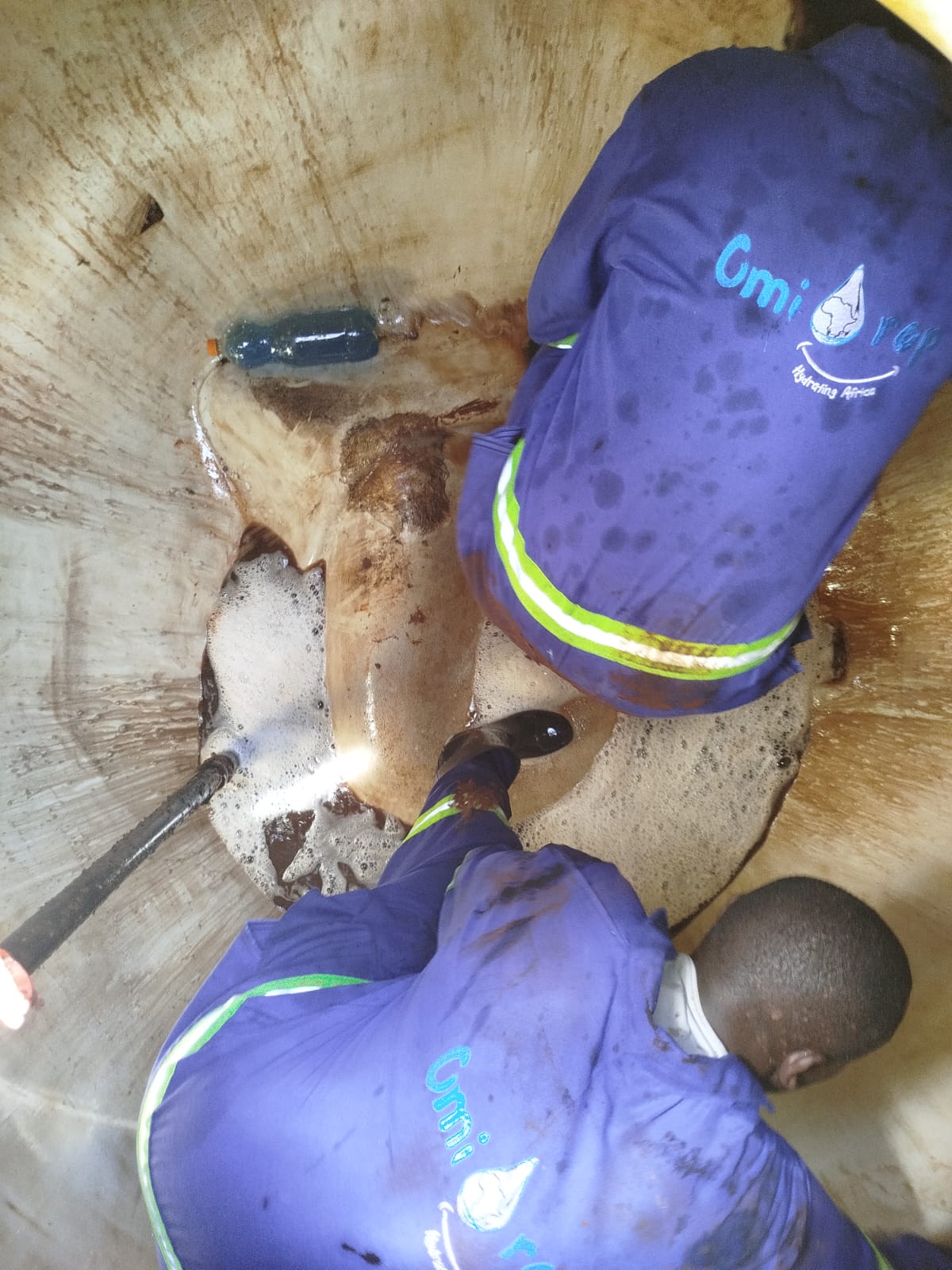
E. coli, Salmonella and Legionella thrive in uncleaned tanks — especially in warm Kenyan conditions — causing diarrhoea, typhoid and skin infections.
Plastic tanks exposed to sunlight develop green algae within months. Algae toxins can survive chlorine treatment at domestic tap level.
Sediment layers at the tank base concentrate heavy metals, organic matter and parasites — all of which enter your tap water.
Biofilm and mineral deposits degrade plastic and steel tank walls, causing cracks and leaks — expensive to repair compared to a regular clean.
Sulphurous smells, a metallic taste, or cloudy water are early signs your tank needs professional attention — before contamination becomes dangerous.
Commercial properties, schools, hospitals and rental landlords in Kenya can face WASREB and county authority action for uncleaned water storage.
Nairobi-specific risk: Dust from construction sites, traffic and unpaved roads means Nairobi water tanks accumulate fine particulate matter 2–3 times faster than rural areas. Westlands, Embakasi and industrial zones like Industrial Area should schedule cleaning every 4–6 months.
QHow Much Does Water Tank Cleaning Cost in Kenya? (2025 Price Guide)
Water tank cleaning costs in Kenya depend on tank size, type, level of contamination, and your location. Below is a transparent guide — all quotes are confirmed before our team is dispatched. No hidden charges, no surprises.
| Tank Size / Type | Best For | Estimated Price | Duration |
|---|---|---|---|
| 500 – 1,000 L Plastic Tank | 1–2 bedroom homes, bedsitters | KES 2,500 – 4,000Most common residential job | 1 – 1.5 hrs |
| 2,000 – 5,000 L Tank Most Popular | 3–5 bedroom homes, small rentals | KES 4,000 – 7,500Includes sludge removal | 1.5 – 2.5 hrs |
| Concrete Underground Tank | Homes, estates, institutions | KES 6,000 – 12,000Based on volume & access | 3 – 6 hrs |
| Steel / Elevated Tank | Rooftop tanks, farm storage | KES 5,000 – 10,000Includes rust inspection | 2 – 4 hrs |
| Commercial / Apartment Block | Multi-unit buildings, schools, hotels | Custom QuoteCall for institutional rates | Half – full day |
What Affects Your Final Water Tank Cleaning Price?
- Tank size and volume — the single biggest cost factor. A 500-litre plastic tank costs a fraction of a 10,000-litre underground concrete tank.
- Contamination level — heavily sludged tanks not cleaned for 2+ years require extra time, extra labour and potentially additional disposal trips, affecting cost.
- Location in Kenya — Nairobi, Mombasa, Kisumu, Nakuru and Eldoret are base-rate zones. Rural and remote locations attract a travel surcharge based on distance from the nearest Omidrop depot.
- Access difficulty — elevated rooftop tanks requiring ladder work, confined space underground tanks, or tanks in gated communities with restricted truck access may incur a small access fee.
- Scheduling window — standard bookings made 24+ hours ahead attract base rates. Same-day urgent requests carry a modest surcharge depending on availability.
Best value: Book your water tank cleaning alongside septic tank siphoning in one visit — you save 15–25% versus two separate callouts. Ask our team about combo pricing when you call.

QWhat Are the Signs Your Water Tank Needs Cleaning in Kenya — Right Now?
Many Kenyan homeowners wait until water is visibly contaminated before calling for a clean. By then, the risk of waterborne illness is already high. Know these warning signs — and how urgently to act on each.
| Warning Sign | Likely Cause | Urgency |
|---|---|---|
| Brown, grey or black water from tap | Heavy sludge or rust contamination in tank | 🔴 Do not use — call today |
| Rotten egg or chemical smell from taps | Bacterial activity (H₂S), algae decay or chemical contamination | 🔴 Stop using — book now |
| Stomach upsets after drinking tap water | E. coli, Salmonella or Giardia in stored water | 🔴 Emergency clean required |
| Cloudy, milky or greenish water | Algae bloom or high sediment — common in plastic tanks | 🟡 Book this week |
| Slimy residue on tank walls (visible inspection) | Biofilm — a bacterial colony that is impossible to remove by rinsing alone | 🟡 Book this week |
| Water tastes metallic or earthy | Dissolved minerals, rust (steel tanks) or organic matter | 🟡 Book within 2 weeks |
| More than 6–12 months since last clean | Routine maintenance interval exceeded | 🟢 Schedule a cleaning now |
If you see brown water or experience illness: Stop using the tank immediately for drinking or cooking. Switch to bottled water and call Omidrop Africa at +254 745 426 565 for a priority same-day clean. Do not attempt to flush the tank yourself — this often spreads contamination without removing it.
QWhat Is the Water Tank Cleaning Process? What Happens Step by Step?
Our 6-step professional process is designed to meet WHO water safety standards and Kenya's Water Services Regulations, 2021. Unlike a simple rinse, every Omidrop Africa clean includes full sludge removal, interior scrubbing, and food-grade disinfection — the only approach that genuinely eliminates waterborne disease risk.
Book & Site Confirmation
Call +254 745 426 565. Describe your tank type and current condition. We confirm the team, arrival time, and quote — no surprises on the day.
Full Tank Drainage
All stored water is safely drained from the tank. This exposes the tank floor and walls, making thorough cleaning possible — a step DIY attempts routinely skip.
Interior Scrubbing
Using brushes and high-pressure jets calibrated for your tank material, our technicians scrub every interior surface — walls, floor, lid seating, and inlet/outlet areas.
Sludge & Debris Removal
All dislodged sludge, sediment, biofilm and organic debris is removed and disposed of in line with NEMA guidelines — not left to settle back into your water.
Food-Grade Disinfection
We apply a WHO-approved, food-grade chlorine disinfectant at the correct concentration for your tank size — eliminating bacteria, algae and parasites without chemical residue.
Final Rinse & Quality Check
The tank is thoroughly rinsed. A final inspection confirms structural integrity, clean walls, and a safe pH. Your tank is ready to refill and use immediately.
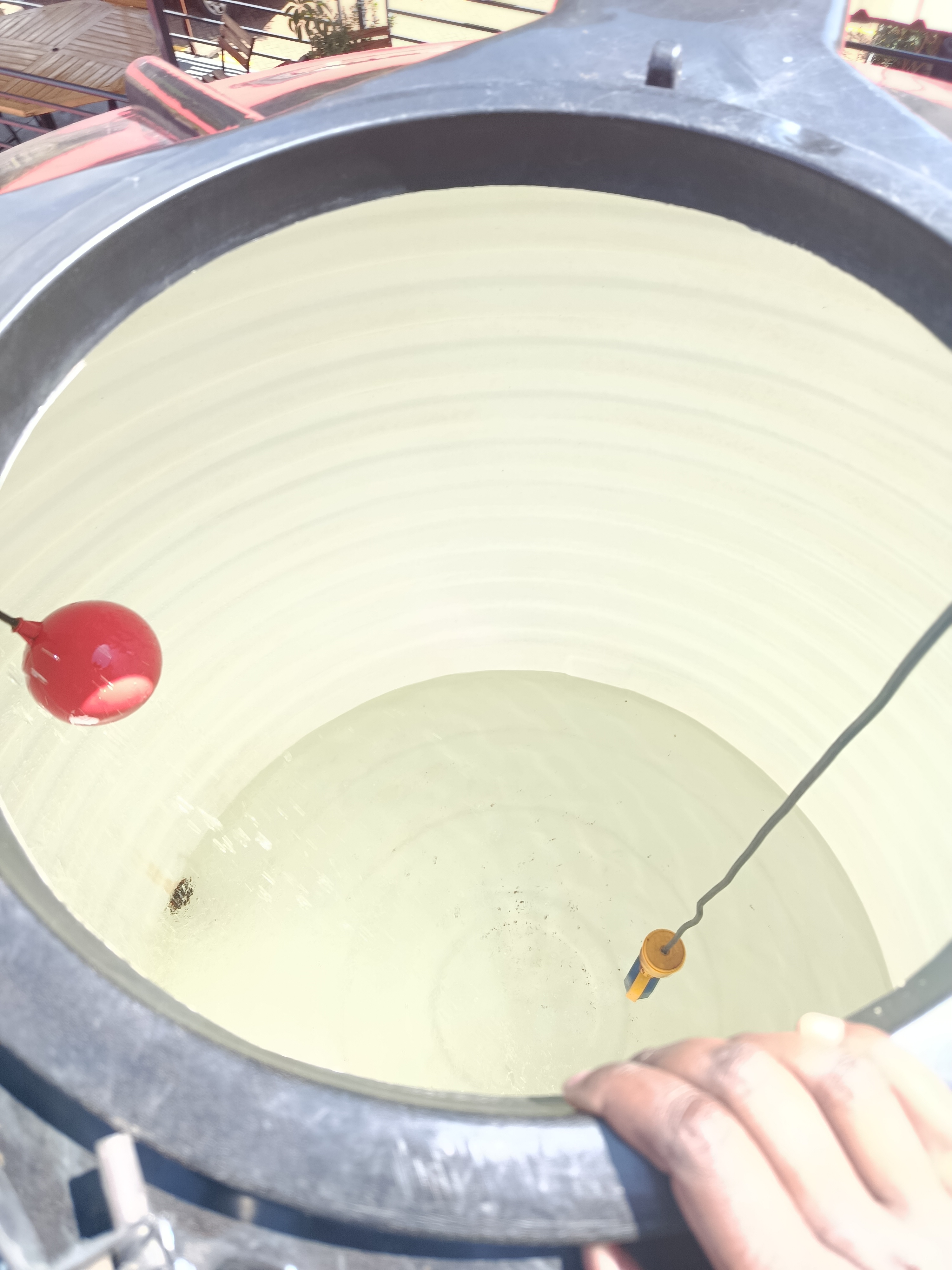
A homeowner in Karen reported that household members had been experiencing recurring stomach upsets for three months. An inspection revealed a heavily sludged 5,000-litre plastic tank with active algae growth — not cleaned in 18 months. Our team completed a full 6-step clean, removed 40kg of sludge, applied food-grade disinfection and issued a water quality report. The household reported no further illness in the following 6 months.
QWhich Types of Water Tanks Do You Clean in Kenya — and What Is Different About Each?
Kenya's diverse geography, water infrastructure and housing stock means water tanks come in many forms. Each tank type requires a tailored approach — one method does not fit all. Here is how Omidrop Africa handles each type.
Plastic (Polyethylene) Tanks
Gentle-pressure scrubbing to avoid wall scratching. Special attention to algae from sunlight exposure. Common challenge in Nairobi estates and Mombasa homes.
Clean every 6 monthsConcrete Tanks
High-pressure jetting for porous surfaces. Crack and joint inspection included. Dominant in rural areas and older Nairobi properties with underground storage.
Clean every 12 monthsSteel (Galvanised) Tanks
Rust assessment before and after cleaning. Interior scrubbing calibrated to avoid removing protective galvanisation. Common in farms and older commercial buildings.
Clean every 9 monthsUnderground Tanks
Confined space entry protocols with full safety equipment. High risk of groundwater infiltration — especially in Kisumu's flood-prone zones. Thorough inspection of seals.
Clean every 12 monthsElevated / Rooftop Tanks
Safe ladder access with secured footing equipment. Bird droppings, dust and UV degradation are the main contamination sources. Very common in Nairobi estates and commercial buildings.
Clean every 6–9 monthsRainwater Harvesting Tanks
First-flush contamination and seasonal sediment buildup are primary concerns. Common in Kericho, Nakuru and Western Kenya. Pre- and post-rains cleaning recommended.
Clean every 6 monthsNot sure what type of tank you have or which service you need? Call +254 745 426 565 — our team will ask a few quick questions and advise the right approach. We never recommend services you do not need.
QHow Often Should You Clean Your Water Tank in Kenya?
The right cleaning frequency depends on your location, tank type, water source, and household usage. Below are Omidrop Africa's recommended intervals based on our service data across Kenya — these go beyond generic advice and reflect real conditions in Kenyan towns and environments.
| Property / Context | Recommended Interval | Why |
|---|---|---|
| Nairobi urban home (Westlands, Karen, Kilimani) | Every 4–6 months | High dust, construction pollution, intermittent supply creates stagnation |
| Mombasa coastal property | Every 4–6 months | Humidity accelerates algae and biofilm; saltwater intrusion risk |
| Kisumu or lake-region home | Every 6 months | High humidity and flooding risk increase microbial contamination |
| Standard upcountry home (Nakuru, Eldoret, Thika) | Every 6–12 months | Lower dust but seasonal sludge buildup from rains |
| School, hospital or commercial kitchen | Every 3–6 months | High usage, regulatory obligation, risk to many users |
| Apartment block or rental property | Every 6 months | High turnover of users, liability for landlord if illness occurs |
| Holiday home or low-use property | Before each occupancy period | Stagnant water in an unused tank is a major contamination risk |
Ask Omidrop Africa to add your property to our scheduled maintenance reminder programme. We contact you when your next service is due — at no extra cost. Enquire here.
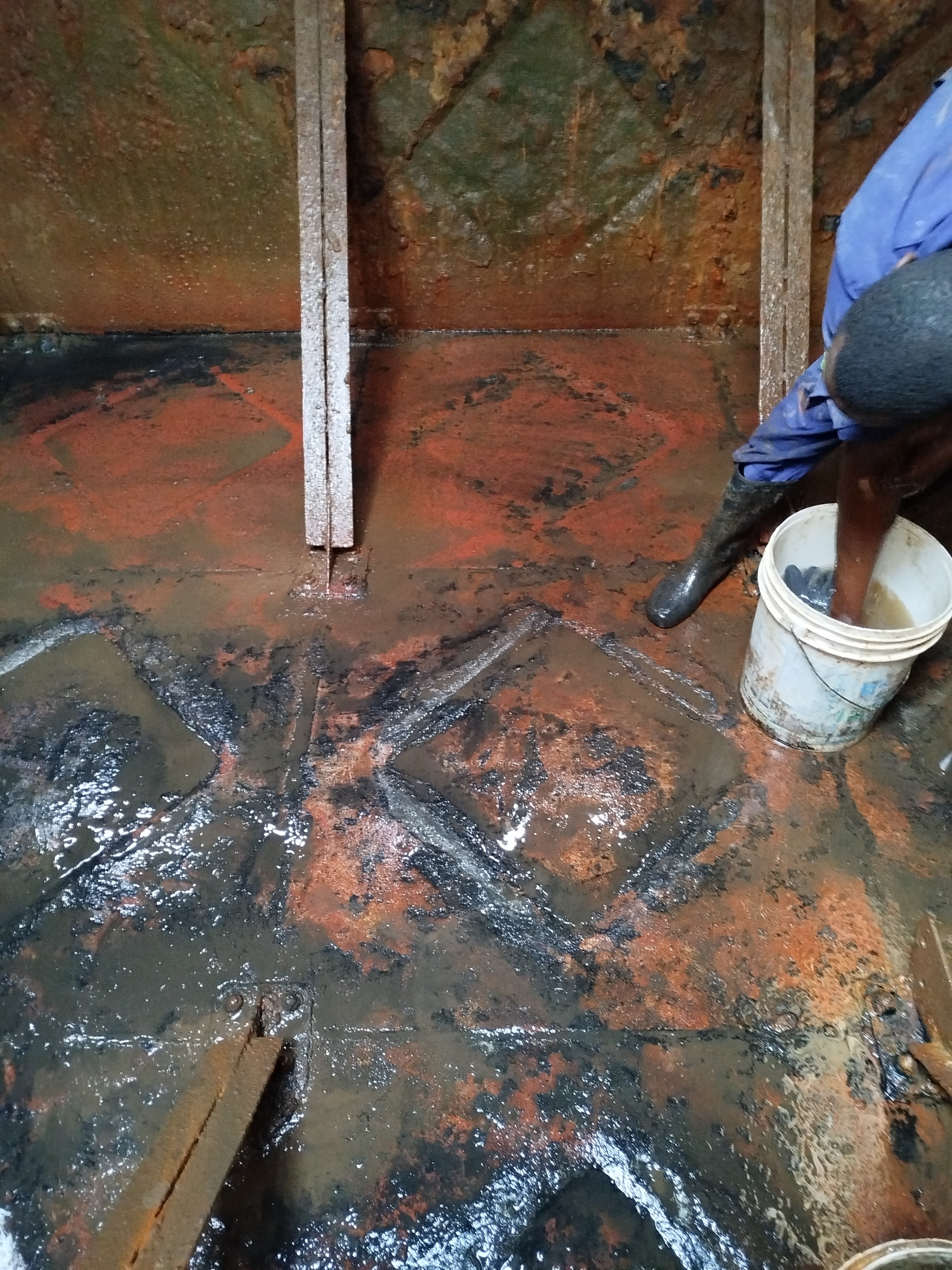
QWhere Is Water Tank Cleaning Available Near Me in Kenya?
Omidrop Africa covers water tank cleaning across 50+ towns and counties in Kenya. Each regional team is equipped for local conditions — whether that is Nairobi's high-rise elevated tanks, Mombasa's coastal humidity, or Kisumu's flood-prone underground tanks.
Nairobi
All estates: Westlands, Karen, Kilimani, Langata, Kasarani, Embakasi, Eastlands, South B/C, Ruaka, Runda, Muthaiga. Same-day service available.
Mombasa
Nyali, Bamburi, Likoni, Kisauni, Changamwe, Mombasa Island. Salt-resistant cleaning methods for coastal tanks.
Kisumu
Milimani, Nyalenda, Kondele, Mamboleo, Kisumu CBD. Specialists in underground and flood-affected tanks.
Nakuru
Nakuru Town, Lanet, Milimani, Bahati, Njoro, Naivasha. Farm, domestic and commercial tank cleaning.
Eldoret
Eldoret Town, Langas, Pioneer, Huruma, Kapsoya. Elevated tank specialists for upcountry properties.
Thika & Ruiru
Thika Town, Juja, Ruiru, Kahawa. Industrial and commercial water tank cleaning services.
Kericho & Western Kenya
Kericho tea estates, Kisii, Homabay, Bungoma. Eco-friendly disinfection aligned with agricultural water use.
Machakos, Kitengela & Athi River
Machakos, Kitengela, Athi River, Mlolongo, Syokimau. Clay-soil conditions handled with specialist underground cleaning protocols.
Also serving: Meru, Nyeri, Embu, Garissa, Lamu, Nanyuki, Kisii, Kakamega, Bungoma, Homa Bay and surrounding rural areas. Call +254 745 426 565 to confirm coverage in your specific location.
QShould I Clean My Water Tank Myself or Hire Professionals in Kenya?
DIY tank cleaning is common in Kenya, but it rarely achieves the hygiene level required for safe drinking water. Here is a straightforward comparison to help you decide.
| Aspect | DIY Cleaning | Omidrop Africa Professional Clean |
|---|---|---|
| Cost | KES 500–2,000 in materials | From KES 2,500 — complete, guaranteed result |
| Sludge Removal | Partial — most sludge stays on tank floor | Complete — all sludge removed and disposed NEMA-compliantly |
| Disinfection | Household bleach — often incorrect concentration | WHO-approved food-grade chlorine at certified concentration |
| Biofilm Removal | Rarely achieved without high-pressure equipment | Full biofilm removal with calibrated high-pressure jets |
| Safety | Fall risk (elevated tanks), confined space danger (underground) | Trained technicians with full safety equipment |
| Time | 4–8 hours, often longer | 1.5–4 hours depending on tank size |
| Post-Clean Water Quality | No test — you assume it is clean | Visual inspection and water quality confirmation included |
| Regulatory Compliance | No documentation for county/landlord requirements | WASREB and NEMA-compliant — certificates available |
In Nakuru, our team frequently encounters tanks that have been "DIY cleaned" — rinsed with a garden hose and treated with household bleach. In 7 out of 10 cases, laboratory tests of the water show persistent E. coli and elevated turbidity. The sludge layer, the source of the contamination, was never removed. A professional clean then costs more because the accumulated sludge is harder to remove after months of re-settling.
Our advice for Kenyan landlords and property managers: Professional water tank cleaning is a documented liability shield. If a tenant or guest becomes ill from contaminated water and you have no service record, you face potential legal and financial exposure. A twice-yearly professional clean costs a fraction of that risk.
QAre Omidrop Africa's Water Tank Cleaning Methods Environmentally Safe?
Yes. Every Omidrop Africa water tank clean complies with NEMA's Environmental Management and Co-ordination Act (EMCA) and uses biodegradable, food-grade chemicals that break down naturally without harming groundwater or drainage systems.
- Biodegradable disinfectants only — our chlorine-based solutions are food-grade and break down completely within 24 hours of application. No harsh acids, no persistent chemical residue.
- NEMA-compliant waste disposal — all tank waste water and sludge removed during cleaning is transported to NEMA-approved treatment points. We never discharge waste into drainage channels or roadsides.
- Water conservation approach — we use minimum effective water volumes for rinsing. Our high-pressure systems achieve better cleaning results with less water than conventional hosepipe methods.
- Food-safe certification — all chemicals used are approved for contact with potable water surfaces. Your tank is safe to refill and drink from immediately after cleaning.
For schools, hospitals, hotels and institutional clients — NEMA compliance documentation and service records are issued after every clean, available for county health inspections on request.
How to Keep Your Water Tank Clean Between Professional Services in Kenya
The right habits between professional cleans can significantly extend safe intervals and reduce your annual water hygiene costs.
- Keep your tank sealed and covered at all times — an exposed tank opening is an invitation for dust, insects, bird droppings and debris. Replace damaged lids immediately.
- Shade plastic tanks from direct sunlight — UV light degrades polyethylene and promotes algae growth. A simple shade structure can double the time between cleans in sunny Nairobi or Mombasa.
- Install an inlet filter — a simple mesh screen on your tank's inlet pipe stops leaves, insects and sediment from entering, dramatically reducing sludge accumulation.
- Do a monthly visual check — inspect the tank exterior for cracks, discolouration, or pest activity. Look at the water surface through the lid for floating debris or colour changes.
- Never let your tank run completely dry in dry season — an empty tank develops biofilm faster when refilled. Maintain at least 10–15% water level at all times if possible.
- Keep a maintenance logbook — record every cleaning date, who performed it, and any issues noted. This record is valuable for landlords, county inspections, and scheduling the next service.