
Septic Tank Siphoning Services Near You in Kenya
Fast, affordable, NEMA-certified septic tank siphoning, pumping and exhauster services — wherever you are in Kenya. Residential, commercial and emergency callouts. Get a free quote before we arrive.
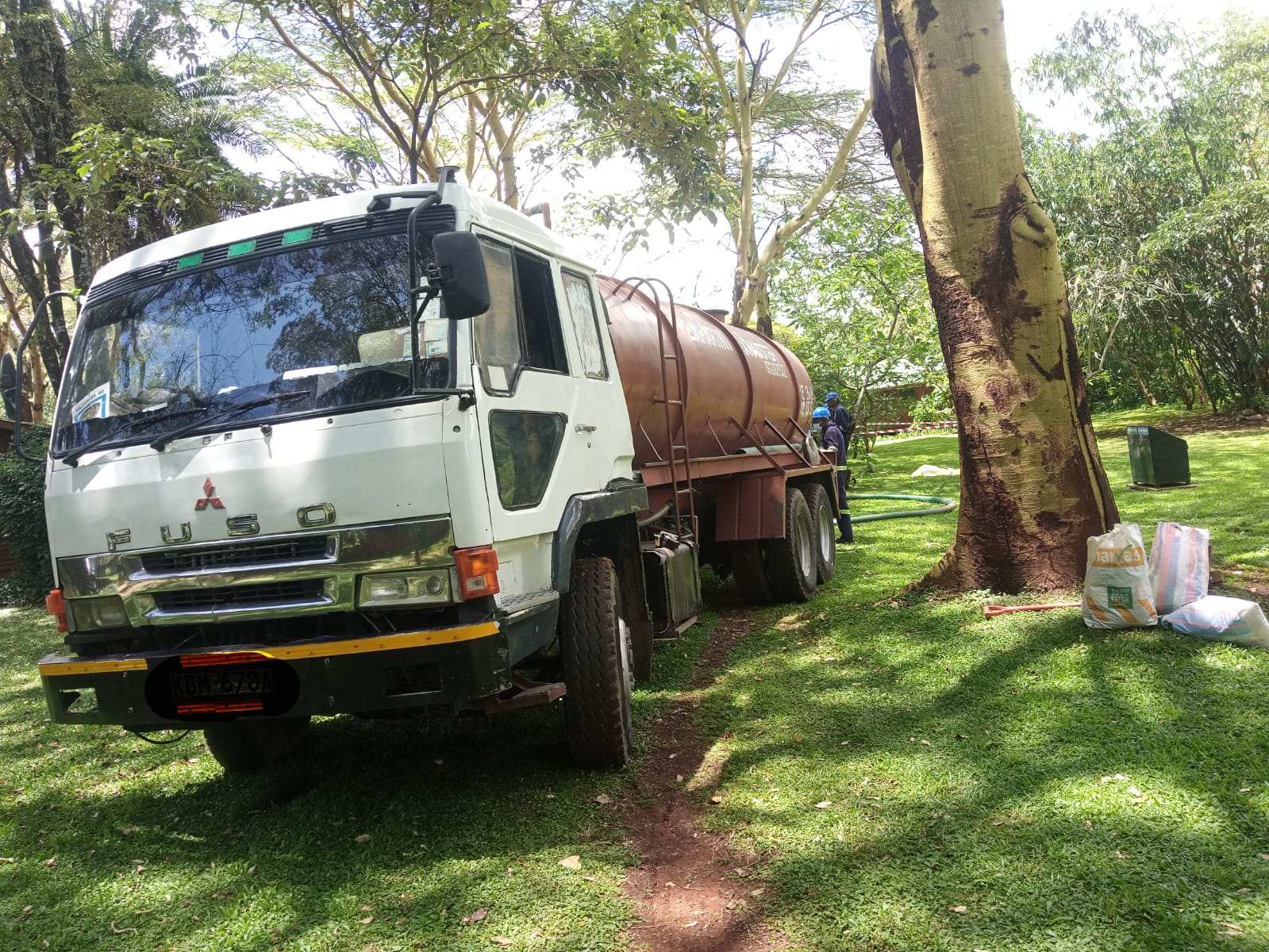
QHow Much Does Septic Tank Siphoning Cost in Kenya? (2025 Price Guide)
Septic siphoning prices in Kenya depend on truck capacity, sludge volume, location, and whether the callout is standard or emergency. Below is a transparent breakdown — no hidden costs, no surprises. All quotes are confirmed over the phone before the truck is dispatched.
| Truck / Tank Size | Best For | Quote | Availability |
|---|---|---|---|
| 3,000 L truck | 1–2 bedroom homes, bedsitters | Custom QuoteWithin Nairobi / major towns | Major Towns |
| 6,000 L truck Most Popular | 3–5 bedroom homes, small rentals | Custom QuoteCovers most residential jobs | Major Towns |
| 10,000 L truck | Apartment blocks, large homes | Custom QuoteMulti-unit buildings | Major Towns |
| 12,000+ L truck | Schools, hotels, institutions | Custom QuoteCommercial / institutional | Major Towns |
| Multiple trips | Heavily loaded tanks | Quote per tripSecond trip discounted | Major Towns |
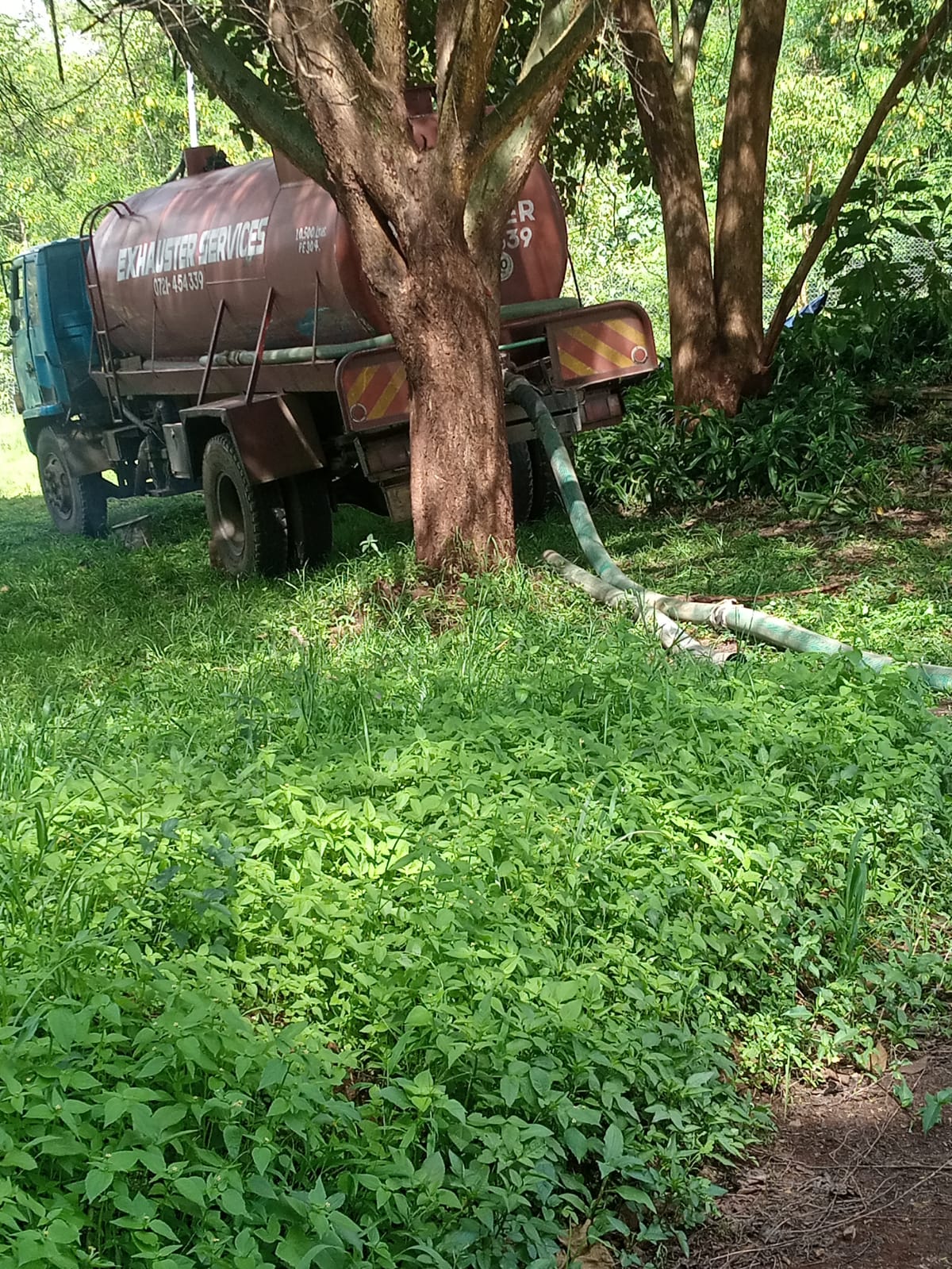
What Affects the Final Price?
- Location — towns within Nairobi, Mombasa, Kisumu, Nakuru or Eldoret get the base rate. Rural areas attract a travel surcharge based on distance from our nearest depot.
- Sludge volume and condition — a tank not emptied for 5+ years may require multiple trips or additional time, affecting cost.
- Emergency vs. standard booking — planned bookings 24+ hours ahead attract standard rates. Emergency same-day or night callouts carry an additional surcharge.
- Access difficulty — narrow roads, locked compounds, upstairs tanks, or heavy foot traffic areas may attract a small access fee.
- Add-on services — combining siphoning with deep cleaning, odor treatment, or CCTV sewer inspection affects total cost but delivers better value than booking separately.
Best value: Book a siphoning + basic clean combo in one visit. This costs 20–30% less than two separate callouts and leaves your tank in much better condition. Ask about our combo pricing when you call.
QIs There 24/7 Emergency Septic Siphoning Near Me in Kenya?
Yes — Omidrop Africa operates a 24-hour emergency septic siphoning line for overflowing, blocked, or critically full tanks across Kenya. Emergency response time is typically 2–4 hours in Nairobi, Mombasa, Kisumu, Nakuru, and Eldoret, and 4–6 hours in peri-urban areas like Kitengela, Athi River, Syokimau, and Thika.
Call immediately if you see any of these: sewage backing up into toilets or showers; pooling raw sewage in the garden; a strong sulphur/rotten egg smell that appeared suddenly; or a septic tank lid that has cracked or sunk. Do not attempt to open the tank yourself — toxic gases can be fatal.
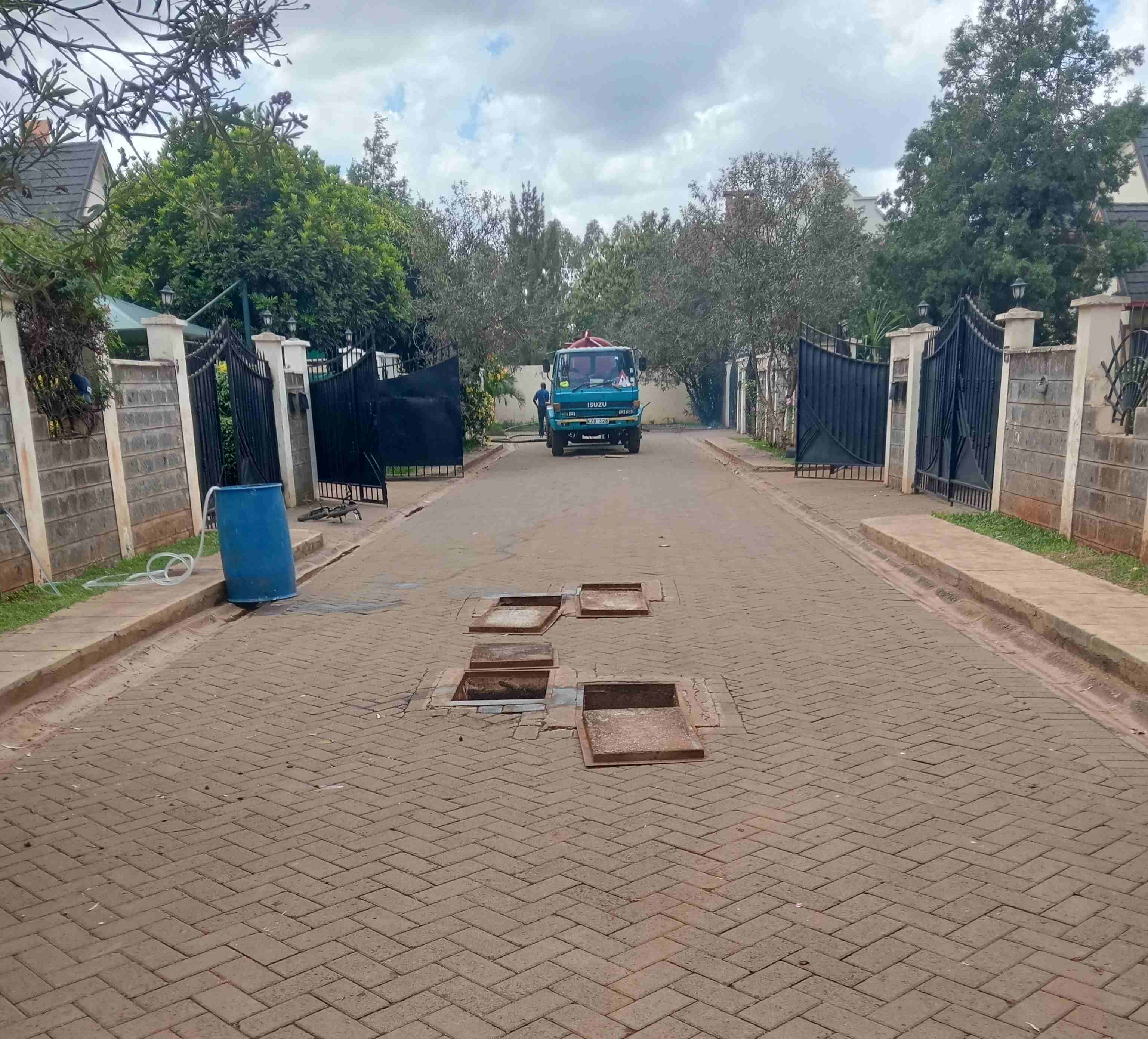
Towns with Fastest Emergency Response Times
Nairobi
All estates — Westlands, Karen, Kilimani, Langata, Eastlands, Kasarani, Embakasi, South B/C. Response: 1–3 hrs
Mombasa
Nyali, Bamburi, Likoni, Kisauni, Changamwe, Mombasa Island. Response: 2–4 hrs
Kisumu
Milimani, Nyalenda, Kondele, Mamboleo, Kisumu CBD. Response: 2–4 hrs
Nakuru
Nakuru Town, Lanet, Milimani, Bahati, Njoro. Response: 2–4 hrs
Kitengela & Athi River
Kitengela, Athi River, Mlolongo, Syokimau, Mavoko. Response: 2–4 hrs
Thika & Ruiru
Thika town, Juja, Ruiru, Kahawa. Response: 2–4 hrs
Eldoret
Eldoret town, Langas, Pioneer, Huruma. Response: 3–5 hrs
Other Towns
Machakos, Meru, Nyeri, Embu, Garissa and beyond. Response: 4–8 hrs depending on distance
For emergency service, do not use the online booking form — call +254 745 426 565 directly so our team can dispatch immediately.
QWhat Is Septic Tank Siphoning and How Does the Process Work in Kenya?
Septic tank siphoning — also called exhauster service, pumping, or honey sucker service in Kenya — is the process of removing accumulated liquid waste and surface scum from a septic tank using a high-powered vacuum truck. It is the most common form of septic maintenance and should be done every 2–3 years for most Kenyan households.
Call & Confirm
Call +254 745 426 565. Give your location and tank size (if known). We confirm the nearest truck and estimated arrival. Quote is confirmed before dispatch — no hidden costs.
Truck Arrives, Site Check
Our exhauster truck arrives at your property. The technician locates the tank access lid and checks sludge depth and liquid levels before starting work.
Vacuum Siphoning
The high-capacity vacuum pump extracts liquid waste and surface scum from the tank. Multiple passes may be needed for heavily loaded tanks or those not serviced for many years.
Rinse & Re-Siphon
A volume of clean water is added to the tank and siphoned again. This loosens residue on walls and the tank bottom, improving the result compared to a single-pass siphon.
Visual Condition Check
The technician inspects the tank condition and advises whether deeper septic tank cleaning, repairs, or a CCTV sewer inspection is recommended.
NEMA-Compliant Disposal
All collected septage is transported to NEMA-approved waste treatment facilities. You receive a service record. Disposal certificates available for commercial and institutional clients.

A client in Ongata Rongai reported pooling water in their garden during the October rains. Our truck arrived within 2.5 hours, extracted 6,000 litres from a tank that had not been serviced for 4 years, and performed a visual inspection that identified a cracked outlet baffle — which was repaired during a follow-up visit. The pooling issue was fully resolved.
QWhat Signs Mean Your Septic Tank Needs Siphoning in Kenya — and How Urgent Is It?
Kenyan homeowners and property managers often miss the early warning signs until the problem becomes an emergency. Here is how to read the signals — and how urgently to act on each.
| Warning Sign | What It Means | Urgency |
|---|---|---|
| Sewage backup in toilet or shower | Tank is at or over capacity | 🔴 Call now |
| Foul odors indoors or near tank | Gases from full tank or blocked vent | 🔴 Book today |
| Pooling or wet patches in the yard | Overflowing tank or saturated drainfield | 🔴 Call now |
| All drains slow simultaneously | Tank full; outlet blocked by sludge | 🟡 Book this week |
| Gurgling sounds from toilets/drains | Air trapped by high liquid level | 🟡 Book this week |
| Lush green grass over tank (dry season) | Liquid effluent surfacing as fertiliser | 🟡 Book within 2 weeks |
| 3+ years since last service | Routine maintenance overdue | 🟢 Schedule now |
Rainy season warning for Kenyan properties: During the long rains (March–May) and short rains (October–November), soil saturation dramatically reduces drainfield absorption — especially in clay-heavy areas like Kitengela, Athi River, and parts of Kisumu. A tank that appears fine in dry weather can overflow within days once rains begin. Service your tank before the rains start.
QHow Often Should You Empty Your Septic Tank in Kenya?
The right siphoning frequency depends on how many people use the system, the tank's capacity, your local soil conditions, and whether the property is in an urban or rural area. Below are Omidrop Africa's recommended intervals based on real service data across Kenya.
Properties on coastal Mombasa soil (sandy, fast-draining) or rocky ground may need less frequent service. Properties in Kitengela and Athi River clay soils, or those near seasonal flooding zones in Kisumu, typically need more frequent attention.
Ask Omidrop Africa to add your property to our scheduled maintenance reminder programme. We contact you when your next service is due — at no extra cost. Enquire here.
QWhat Kind of Septic Siphoning Jobs Has Omidrop Africa Completed in Kenya?
Real experience matters. Below are a selection of recent septic siphoning jobs completed by Omidrop Africa teams across Kenya — giving you a practical sense of what to expect.
Three-bedroom home. Tank not emptied in 5 years. Sewage smell triggered a call. Two-trip job — 12,000L total extracted. Outlet pipe found partially blocked; cleared on-site.
Resolved in 3.5 hrs. No further issues reported in 8 months.
20-unit apartment block. Regular maintenance contract — quarterly siphoning. 10,000L truck. Building manager receives service report after every visit.
Zero emergency callouts since maintenance contract began.
Boarding school with 600+ students. End-of-term clean during school holiday. Two 12,000L trucks deployed. County health inspection passed the following term.
NEMA compliance certificate issued. Completed in one day.
Emergency callout at 11pm. Sewage backing into ground-floor flat of rental property during El Niño rains. Truck arrived in 2h45m. Tank at 105% capacity.
Emergency resolved overnight. Recommended pre-rain maintenance for future.
Boutique hotel near Bamburi. Grease trap and main septic tank serviced together. Combined service saved the hotel a separate callout fee. Monthly service now scheduled.
Grease trap cleared. Full septage removed. NEMA certificate provided.
Large home with two separate septic systems. Acacia root intrusion into outlet pipe identified during post-siphon inspection. Referred for CCTV sewer inspection.
Root cleared via jetting. System now fully operational.
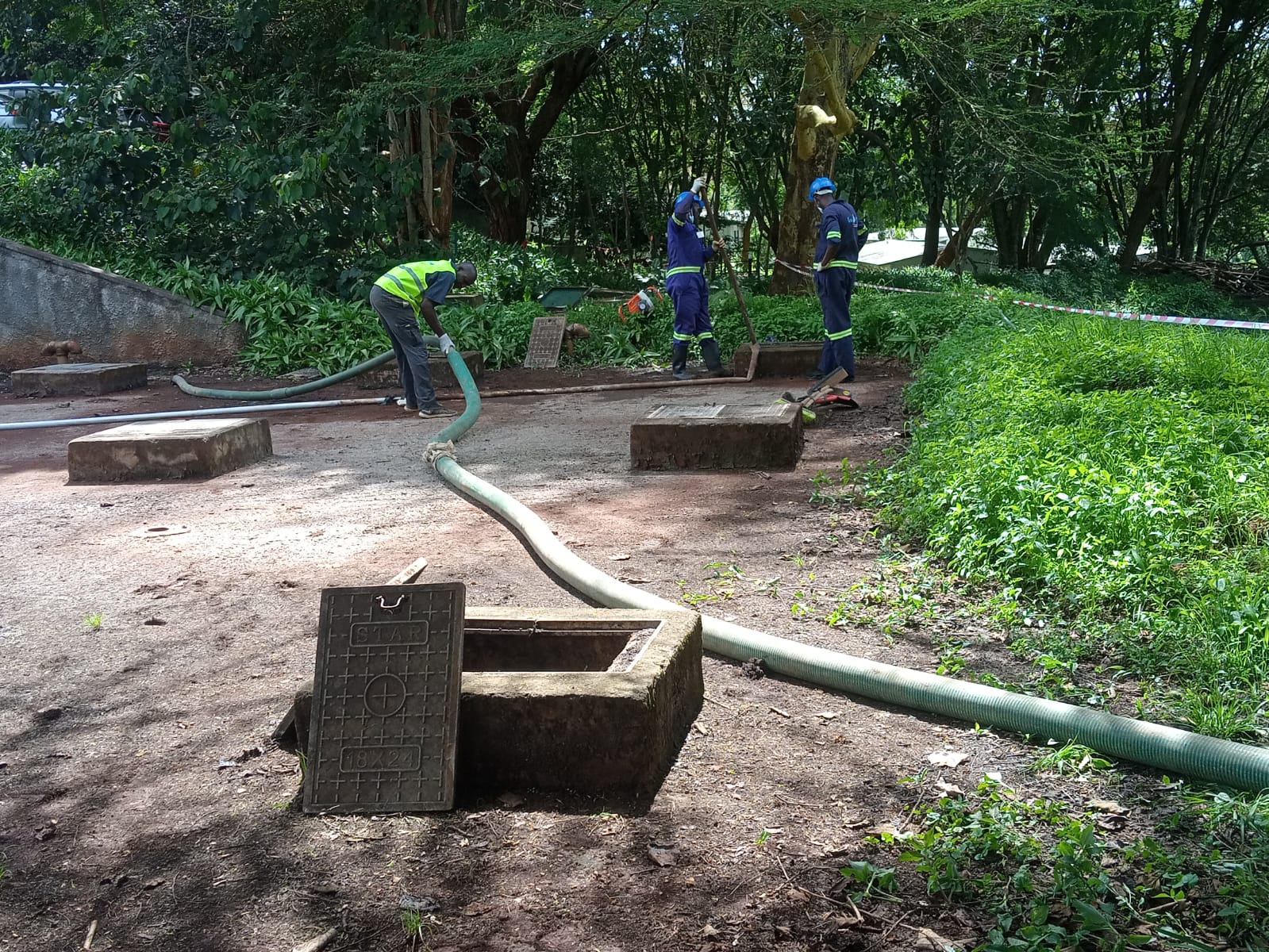
QSeptic Siphoning vs Septic Cleaning — Which One Do You Actually Need in Kenya?
This is the most common question we receive. The right answer depends on how long since your last service, the current condition of your tank, and whether you are dealing with an acute problem or routine maintenance.
- Choose siphoning if: your last service was within 3 years, the tank has liquid waste and scum but is not heavily sludged, you need a routine maintenance visit, or you have an urgent overflow to resolve quickly.
- Choose deep cleaning if: your tank has not been serviced in 5+ years, you have persistent odors after a standard siphon, sludge has built up on the tank floor, or your drainfield is showing signs of failure.
- Choose the combined service if: you want maximum value and full system restoration in one visit — this is the most cost-effective option and what we recommend for any tank not serviced in 3+ years.
Read the full comparison in our Septic Tank Cleaning Guide for Kenya or explore our detailed septic siphoning guide.
Not sure which service you need? Call +254 745 426 565 and describe what you are experiencing. Our team will advise the right option and give you an honest quote — we never upsell services you do not need.
QIs Septic Siphoning in Kenya Regulated? What Should Property Owners Know?
Yes. Septic waste (septage) disposal in Kenya is regulated by NEMA under the Environmental Management and Co-ordination Act. Counties including Nairobi City County, Mombasa County, and Kisumu County enforce additional by-laws around exhauster operations and waste disposal.
Despite this, illegal dumping by unlicensed exhauster operators remains widespread — septage is dumped in open drainage channels, along roadsides, and near rivers, contaminating water sources and spreading disease. This is a public health hazard that Omidrop Africa is committed to combating through fully compliant operations.
- All waste transported to NEMA-approved treatment facilities — we never dump. Full audit trail available for every service.
- Disposal certificates on request — essential for schools, hospitals, apartment blocks, and commercial properties facing county inspections.
- Licensed operators — all Omidrop Africa field teams carry valid NEMA and county-level certifications.
- Full PPE compliance — technicians are equipped with appropriate protective equipment for safe operation in confined space environments.
How to spot an illegal operator: They cannot tell you where waste goes. They carry no company branding or ID. Their prices seem impossibly cheap. They refuse to provide a receipt or certificate. Always ask for a disposal receipt — as the property owner, you share legal responsibility if waste is illegally dumped after collection.
Our Full Range of Residential Septic Services in Kenya
Beyond standard siphoning, Omidrop Africa offers a complete suite of septic and wastewater services — so you never need to call a second company.
- Septic tank siphoning & pumping — standard and emergency, all truck sizes, 50+ towns. Learn about our exhauster services.
- Septic tank deep cleaning — sludge removal, wall scrubbing, hydro jetting, bacterial treatment. View our cleaning service.
- CCTV sewer inspection — camera inspection for blockages, root intrusion, and structural defects. Sewer inspection service.
- Septic system repairs — baffle replacement, tank crack repair, pipe rehabilitation, KEBS-compliant. Tank repair service.
- Soakpit installation & rehabilitation — for failed drainfields or new system construction. Soakpit installation.
- Biodigester installation — an eco-alternative that reduces pumping frequency by up to 50%. Biodigester service.
- Sludge removal — specialised removal of heavy accumulated bottom sludge for tanks not serviced for many years. Sludge removal service.
- Drain & sewer unblocking — mechanical and hydro-jet clearing of blocked household and commercial drains. Drain unblocking.
After siphoning, you may also need: water tank cleaning if your storage tank has not been serviced recently, or drain cleaning for kitchen and bathroom lines affected by years of grease and soap buildup.
How to Extend Time Between Siphoning Services in Kenya
Regular siphoning is non-negotiable — but the right habits between services can extend the intervals and reduce your annual maintenance costs significantly.
- Spread water use throughout the day — do not run the washing machine, dishwasher, and shower simultaneously. High daily loads overwhelm the tank's settling process.
- Never flush non-biodegradables — wet wipes, sanitary products, plastic packets, and cooking oil are the leading causes of premature tank filling and blockage in Kenyan homes.
- Switch to bio-based cleaning products — bleach and chemical cleaners kill the bacteria that break down waste. Bio-based alternatives (widely available in Kenyan supermarkets) keep your tank's ecosystem healthy.
- Use bio-enzyme additives monthly — a regular dose of commercially available bio-enzyme product keeps bacterial activity high between professional services.
- Keep vehicles off the drainfield — vehicle weight compacts soil above the soakpit, reducing absorption capacity — especially critical in clay-heavy soils like those found in Kitengela, Athi River, and parts of Thika.
- Keep a maintenance logbook — record every service date and provider. This becomes a valuable asset record and helps you schedule the next service on time.